
War photographer Alfred Yaghobzadeh, noting that the transformation of media has changed the course of journalism, said: “In the next few years, we will see the death of photojournalism.”
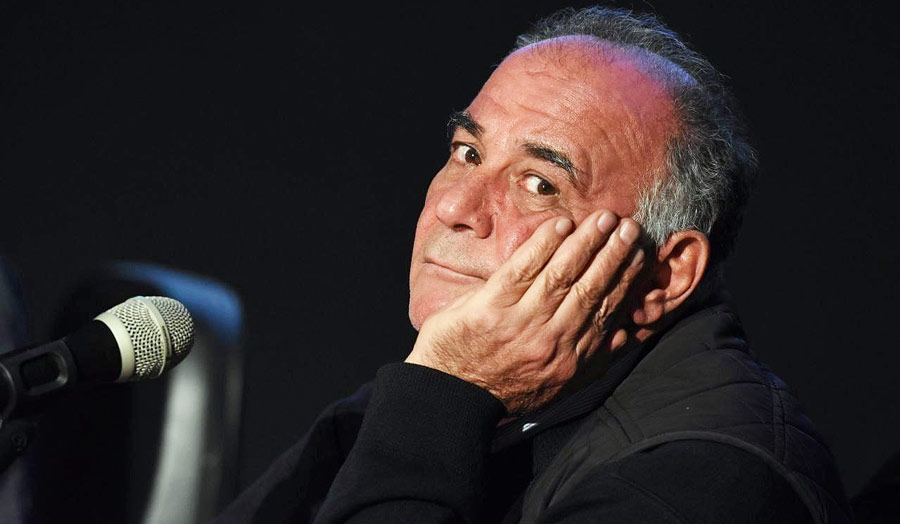
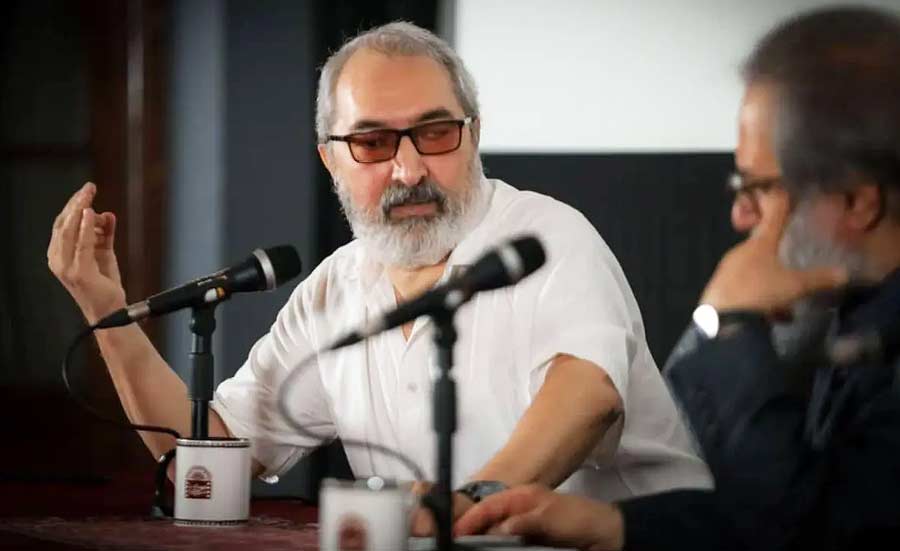
According to Artmag.ir, citing the Public Relations Department of Iranian Youth Cinema Society , a specialized meeting and workshop on transferring the experience of “war photography and social documentary” by Alfred Yaghoubzadeh, a veteran photographer and winner of international awards, was held on Saturday evening, December 13, 2025, in the Cinematograph Hall of Cinema Museum, with the support of the Vice President of Education and Research of Iranian Youth Cinema Society and hosted by Mehdi Ashena.
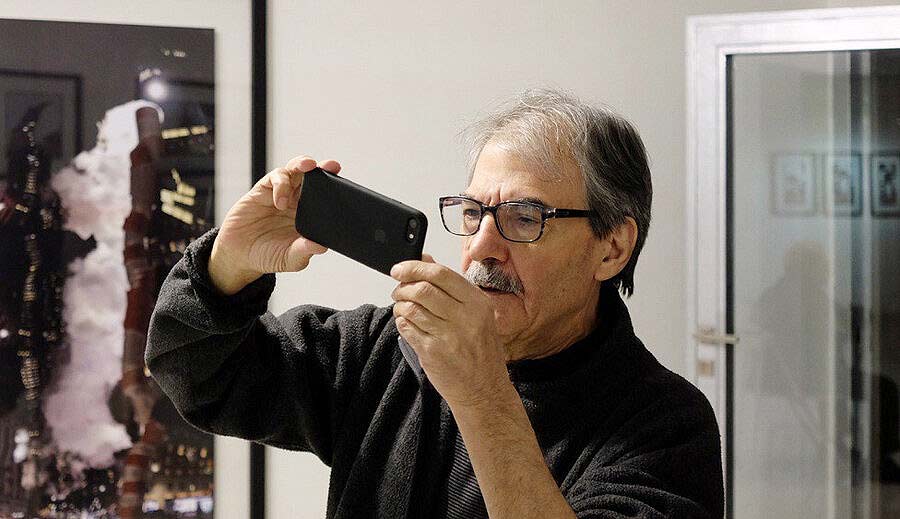
At the beginning of the session, a collection of Alfred Yaghoubzadeh’s personal photographs were displayed to the audience along with his audio explanations. The session was held in a question-and-answer format, and Yaqoobzadeh answered the questions of the attendees.
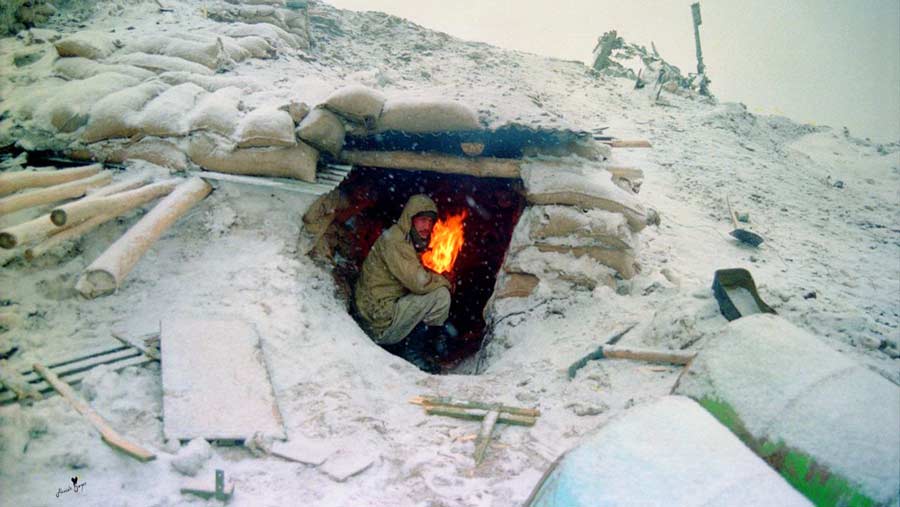
In the second part of the session, photographs of the Iran-Iraq War by Alfred Yaqoobzadeh were displayed. Explaining these works, he said: Photographing the Iran-Iraq War took about two and a half years, and we were always struggling with the issue of permits. During the time of Engineer Mehdi Bazargan, I went to the Mizan newspaper and offered to provide them with the photographs for free and receive a journalist’s card in return. Through Martyr Mehdi Chamran, I went to irregular wars, which I thought were more specific for photography. After that, a way opened up for me to photograph the army and the IRGC. I was present at the front most of the time, and at that time I was collaborating with the Associated Press and Gamma news agencies. I left Iran after two and a half years, and naturally, the number of my photos is less than that of photographers who were in the war for eight years.
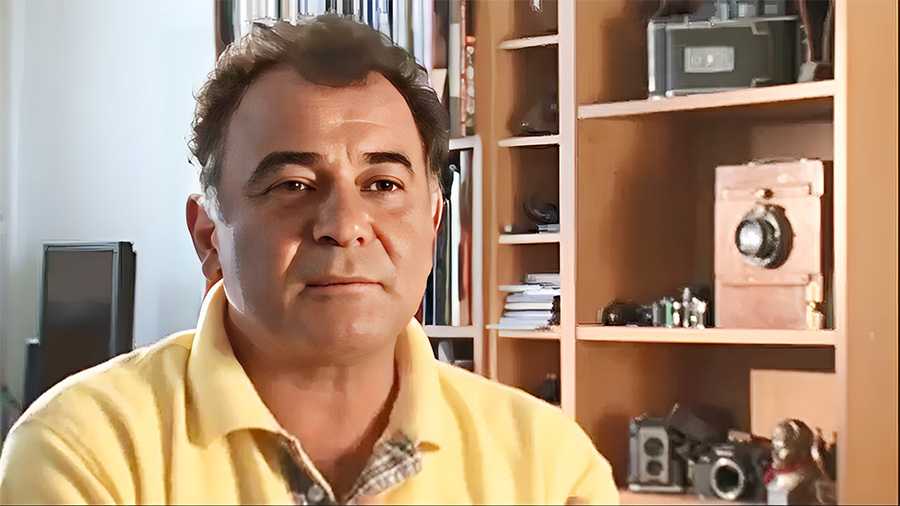
He said about the difference between war photography and other branches of photography: “You can also take social, artistic, or news documentaries during war. After the revolution, the number of photographers was small, and they mostly took news photos; photographers like Kaveh Golestan and Mohammad Farnoud. Since I was not in the domestic press, we always had trouble getting permission.
The veteran photographer also explained the framing and artistic aspect of war news photography: Even though the photos were taken in a hurry, framing was important. The important thing was to think about our own lives; a dead photographer is not a good photographer. Framing should be such that the subject, genre, and situation are defined in a frame, and the photo should be readable and able to convey everything emotionally and humanly, especially in that era when photography was the most important tool for showing reality.

Yaghobzadeh, referring to his nearly five decades of professional activity, said: I have been taking photos for 45 years and I have had many moments of regret that I was not there to take that photo, but you should not think too much about it. In war photography, luck is important, but more important than that is recognizing the situation. Often, luck is not enough and the photographer must be professional and know what to do at that moment.
He continued: “There are different branches of photography; cinematic, nature, fantasy, etc. I had no experience in cinema photography. I didn’t set any boundaries for myself and took photos wherever I could. I tried to be careful during bombings, but nothing stopped me from taking photos of what I wanted to take.
In response to a question about the priority of helping or taking photos in critical situations, Yaghoobzadeh said: “Many people ask me if there was a situation where I could have helped but instead took a photo? My answer is that I am human; if someone is injured and I am the only one present, I will definitely help. But if, for example, ten other people are there, I am doing my duty. A photographer or journalist is not a rescuer or an emergency worker. I have to record the moment and others will help.”
In the third part of the session, Alfred Yaghoubzadeh’s photos of Palestine and the Intifada were displayed. Explaining this section, he said: These images are from the time when Yasser Arafat returned to Palestine from exile, and this process led to the Oslo peace. I lived in Gaza for three years, which was not a comfortable period, and then I returned.
This veteran photographer emphasized his professional identity and stated: I am a war photographer, a crisis photographer, and a social documentary photographer, and wherever such events occur, I must be present. I do not give ideas to photographers in other fields; each field has its own rules.
Referring to Afghanistan, Yaghobzadeh said: Two months before the last time the Taliban entered Afghanistan, I was present in this country and I had come to believe that the Taliban would return and we guessed that their main target was women. For this reason, I photographed all professions, male and female students, fashion, singers, and the social atmosphere, because I knew that with the arrival of the Taliban, many of these manifestations would disappear. The duty of a social documentary photographer is to record something if he feels that something is being destroyed, and this view was the result of my acquaintance with that area.
He said about the technical and media developments in the field of photography: In the era of analog cameras, the number of photographers was less and the photographer was of special importance to people. With the advent of digital tools, the situation changed; although we had hoped for digital to enter before, with its arrival, photography became easier and the number of photographers increased. With the advent of mobile phones, everyone became a citizen journalist and in crowded events, the work of professional photographers became more difficult. This trend is positive in one sense and negative in another; with the spread of mobile and social media, many magazines no longer send personnel and in short-term events, the citizen journalist is the main winner.
Yaghobzadeh added: “In today’s wars, which are fought with drones and missiles, we rarely see armed soldiers, and today’s war photographer mainly photographs ruins, hospitals, and the wounded. In the past, they used to say pen and paper, photos, and newspapers, then came television, then the internet, and then news apps. In my opinion, in the next few years, we will see the death of photojournalism.”

Emphasizing his professional independence, he stated: Politics was not very important to me and I always tried to work independently. I show reality like a mirror and my party is my camera. Social documentary photography is unrepeatable; in floods, earthquakes and crises, the moment cannot be recreated, but in regular or cinematic photojournalism, sometimes officials or actors can be asked to repeat a scene.
In the next part of the session, Alfred Yaghobzadeh’s photographs of Armenians in the Middle East were displayed. Referring to the burning of churches by Salafi groups, he said: Before the Salafis or the Muslim Brotherhood came to power in Egypt, I decided to photograph Christians; before they were forced to emigrate to Iraqi Kurdistan. At that time, ISIS was active in Iraq and Syria, and in 2014, I photographed the lives of Christians in Syria and Iraq. I documented the journey of Christianity from Jerusalem to Egypt, all the churches and traditions, and then I went to Turkey. During the Armenian Genocide, I photographed the Hagia Sophia. After Turkey, the Armenians came to Julfa, and I also photographed in Isfahan and Lebanon. My effort is to document this report and the history of the religions of the Old Testament; this project has been carried out in eight countries and I am still working on it.
Yaghobzadeh said about the use of mobile phones in photography: A professional photographer does not pick up a mobile phone because he respects the camera. Even if someone wants to interview me, I do not allow photography with a mobile phone, except in situations where something happens in the moment and I do not have a camera with me, in which case I have to become a master of the mobile phone.
He continued, emphasizing the importance of research in photography, stating: Photography is not just about taking pictures; you have to study, find a subject, and have a report and plan for what you want to do. When you enter a culture, country or region with information and study, you consciously decide what to photograph, choose the subject, determine the type and model of the photo, and finally present a complete photo report.
Referring to the issue of copyright in Iran, this veteran photographer said: Unfortunately, there is not much attention to copyright in Iran. Digital photography has made it possible for the name and characteristics of the photographer to be recorded in the file. In the foreign press, they respect the photo and the photographer and ask for permission to use the photo, which is important both financially and in terms of mentioning the name of the author. The IPTC Standard allows the information of the author to be stored in digital photos.

At the end of the session, Alfred Yaghoubzadeh‘s photos from India, including traditional festivals and rituals, sacred animals, and the cultural life of the country, were displayed. In response to a question about photo collections sent to festivals, Yaghoubzadeh said: A photo collection is a photo report that introduces a topic or subject in sufficient numbers and in a complete manner; in terms of scope, time, and various dimensions of the subject. One must examine what the subject is, what contexts, backgrounds, and dimensions it has, and photograph all of them. For example, in photographing a city, time, architecture, culture, environment, and geography are important, and all of these must be seen in the collection. Such a collection cannot be formed in a day and may take a year or more.
This specialized meeting was met with a significant reception from photography activists and students, and Yaghoubzadeh answered questions from attendees in various sections.
The final part of this specialized workshop on transferring experience was a commemorative photo of the attendees in the Cinematograph Hall with Alfred Yaghoubzadeh, which was recorded in the photographers’ frame.