

Published in Germany's Die Welt Newspaper:
Mansour Jahani Recounts the Minab Tragedy and the Impact of War on Iranian Cinema
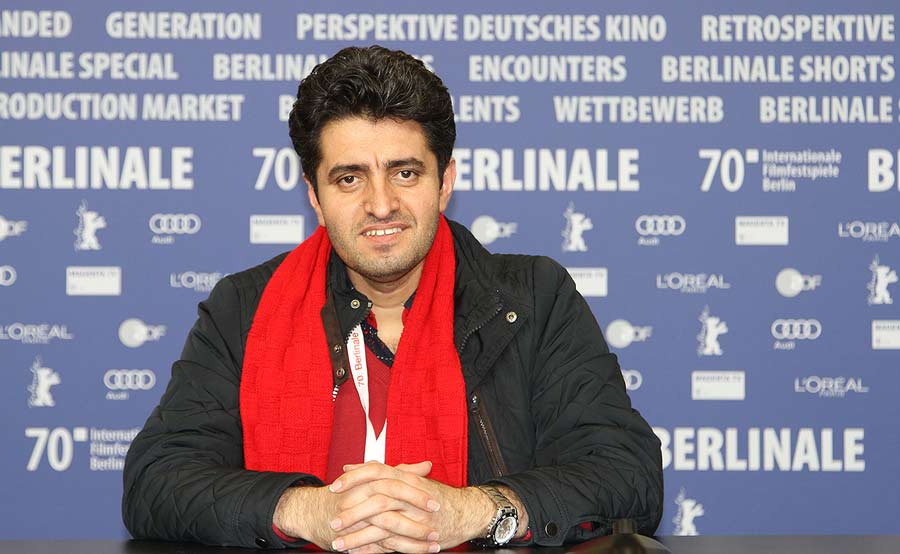
Mansour Jahani in Die Welt: “Iranians Value Their Culture More Than Western Nations.”
According to Artmag.ir, Die Welt, one of Germany’s leading and widely read newspapers, has published a report stating that Mansour Jahani, an independent Iranian journalist and film critic, recounted that at the beginning of the 40-day illegal and imposed war, two U.S. Tomahawk missiles struck Shajareh Tayyebeh Primary School in the city of Minab, claiming the lives of 168 innocent Iranian children.
In a special German-language report, Die Welt examined the situation of Iranian cinemaa during the war, referring to the views, information, analysis and accounts of Mansour Jahani on the state of Iran’s cultural sector during the 40-day illegal and imposed war and in its aftermath.
The following is Mansour Jahani’s account, published by Die Welt, on the tragic attack on Shajareh Tayyebeh Primary School in Minab, the destruction and damage inflicted on mosques, historical, religious and sacred sites, infrastructure, scientific, medical, industrial, sports, cultural and artistic centers, film production, the current state of Iranian cinema, and, in particular, the losses suffered by Iran’s film industry.

Severe Damage to Shokoofeh Cinema, One of Iran’s Largest Movie Theaters
Shokoofeh Cinema, located in Shohada Square in Tehran, is one of the oldest cinemas in the Iranian capital and, with a seating capacity of 1,100, one of the largest and best-equipped movie theaters in the country.
On Sunday, March 1, 2026, the second day of the illegal attacks and military aggression by the United States and Israel, the cnemaa was struck by two missiles, causing severe damage to the roof of its main auditorium.
The projection room, administrative offices, sound and visual equipment, projection booth, cinema screen, restrooms and parts of the second auditorium also sustained significant damage, while other sections of the building were completely destroyed. The cinema remains closed.
Iranians Value Their Culture More Than Western Nations
First and foremost, it should be understood that Iranians place greater value on their culture, art, heritage and ancient civilization than Western nations do. U.S. President Donald Trump could not have made a more disgraceful threat than promising to “bomb Iran’s 7,000-year-old civilization and send it back to the Stone Age.”
Numerous Cultural Institutions Damaged During the 40-Day War
During the 40-day war, numerous cultural institutions suffered serious damage. A synagogue in Tehran was completely destroyed in an Israeli airstrike. Golestan Palace and Saadabad Palace, both former royal residences, as well as Shah Abbas Mosque in Isfahan, a UNESCO World Heritage Site, sustained severe damage.
The Pasteur Institute of Iran, Sharif University of Technology, Iran University of Science and Technology, and Azadi Stadium were also seriously damaged by aerial bombardments.
Hamoun Theater and the Faculty of Cinema and Theater Damaged
On Friday, March 13, 2026, a blast wave struck Hamoun Theater in Tehran, damaging its roof and shattering its doors and windows.
On Monday, March 16, 2026, the Faculty of Cinema and Theater at the University of Art in Tehran and Honar Hall, one of the few specialized venues for children’s and youth theater in Iran, were also damaged by explosions.
Abbas Kiarostami’s House Damaged in Nighttime Airstrike
On Monday, March 23, 2026, the house of Abbas Kiarostami, whose Palme d’Or at the 1997 Cannes Film Festival marked the beginning of the global recognition of Iranian cinema, was damaged in a nighttime airstrike.
During the early days of the war, Rezvan Studio in Tehran was destroyed. A team was producing a 3D animated film for children there. Despite the damage, they continued their work and completed the film for television broadcast.
Around 100 Feature Films Are Produced Annually in Iran
Cinema holds a special place among the arts in Iran. Approximately 100 feature films are produced annually in the country, a process that continued even during the recent war.
Iranian cinema has also developed a unique genre known as Sacred Defense Cinema, focusing on the Iran-Iraq War of the 1980s and, to some extent, reminiscent of Hollywood films about the Vietnam War.
These films are patriotic in nature, portraying those who sacrificed their lives in defense of Iran as their central heroes. Their subjects range from battlefield stories to the challenges faced by war veterans after returning home. Around 200 films in the Sacred Defense genre have been produced over the past three decades.
Iranian Films Have Won Prestigious International Awards
Over the past three decades, Iranian cinema has received numerous prestigious international honors, including two Academy Awards, two Palme d’Or awards at the Cannes Film Festival in France, three Golden Bears at the Berlin International Film Festival in Germany, one Golden Lion at the Venice International Film Festival in Italy, one Golden Globe Award, and many other international prizes.
Iranian Cinema Promotes Humanity, Compassion and Resistance Against Oppression
Iranian filmmakers have developed a distinctive cinematic style that supports the universal values of humanity, compassion and resistance against oppression.
Iranian films have been widely praised by international film festivals and institutions for their minimalist approach, visual aesthetics, subtle storytelling techniques, and their ability to address complex issues without presenting them directly on screen.
One common strategy is to portray romantic love between adults through the innocent perspective of children. Another is to use traditional rural life as a backdrop for exploring social issues associated with urban society.
Two U.S. Tomahawk Missiles Claimed the Lives of 168 Children in Minab
Although Asghar Farhadi has spent considerable time abroad, he has not officially severed his ties with Iran, even though three of his five most recent films were produced outside the country. He has nevertheless sought to maintain a balance with the issues affecting his homeland.
At the beginning of the war, two U.S. Tomahawk missiles struck Shajareh Tayyebeh Primary School in Minab, killing 168 children.
Speaking at the 2026 Cannes Film Festival, Farhadi referred to the incident as a “tragic event,” stating that many innocent people, including children and civilians, had been killed in the attacks targeting Iran.
Cinema House Holds Memorial for the Innocent Victims and Schoolchildren of Minab
Among the organizations representing Iran’s independent film community, the Cinema House, often regarded as the Iranian equivalent of Western film academies and representing 29 professional guilds, joined the public condemnation of the Minab tragedy by organizing a memorial ceremony for the innocent victims and schoolchildren. Senior members of the organization’s Board of Directors attended the event.
Farabi Cinema Foundation Launches Screenwriting Competition in Memory of the Children of Minab
On Saturday, April 19, 2026, the Farabi Cinema Foundation announced a national screenwriting competition titled *The School I Used to Attend*, dedicated to the memory of the children of Minab Primary School.
Professional screenwriters, filmmakers and specialists working in the field of screenwriting were invited to participate.
145 Cinemas Across Iran Reopened During the War
Because of the wartime situation, all cinemas across Iran were closed when the 40-day war began on Saturday, February 28, 2026.
Eighteen days later, while military attacks were still ongoing, 145 cinemas in different cities resumed operations.
Although cinema attendance dropped by nearly half amid widespread public concern, the reopening demonstrated the determination of Iran’s cinema industry to continue its activities despite the difficult circumstances of war.