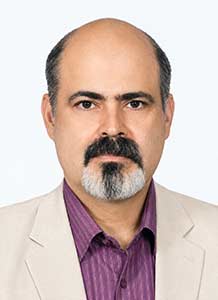

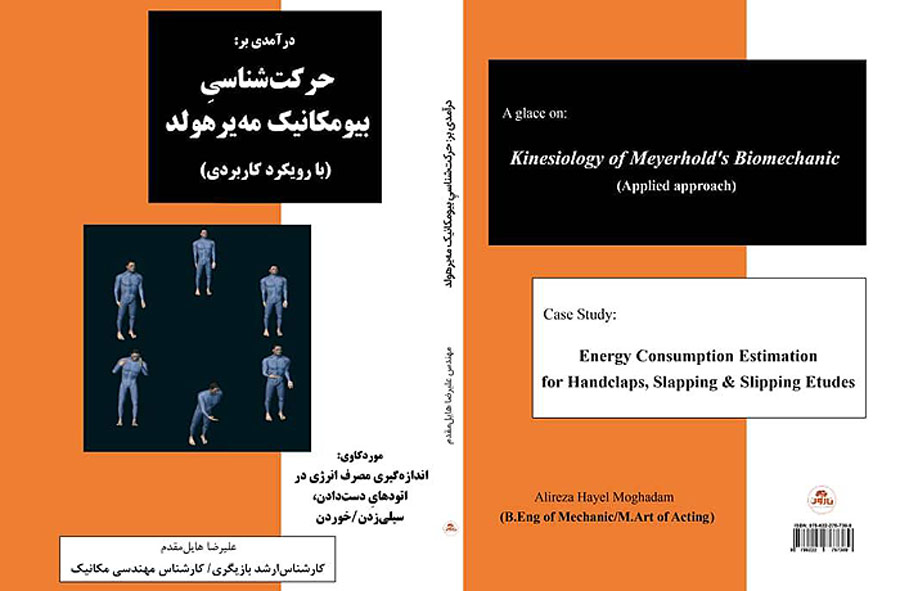
“An Introduction to Kinesiology of Meyerhold’s Biomechanics: A Applied Approach”, written by Alireza Hayel Moghadam and published by Narvan Danesh, is an interdisciplinary study comprising six chapters. It carefully explores the relationship between scientific principles and the aesthetic perspective of physical acting, for students, trainees, instructors and anyone interested in its theoretical and practical dimensions.
According to Artmag.ir, the first chapter traces the emergence and historical development of theatrical biomechanics. It discusses the leading figures behind this performance technique in Russia amid the major social, historical and political upheavals of the early 20th century, as well as its evolution before and after its founder.
The second chapter explains the conventions of theatrical biomechanics, presenting them in accessible language for readers unfamiliar with the performing arts.
In the next two chapters, readers enter the intricate world of movement in physics and mechanics. Fundamental principles, concepts and definitions of movement, as understood by biomechanists and kinesiologists, are examined alongside related parameters, methods and techniques, and measurement equipment.



The book aims to provide acting and directing students with foundational knowledge of non-theatrical biomechanics and mechanics, while avoiding complex mathematical and physics concepts.
The fifth chapter introduces readers to the current state of physical theatre studies including biomechanics, performance art and dance art in Iran and elsewhere. It considers the efforts of acting academies to develop performance based on bodily movement, discusses the gap between existing practice and the ideal vision, and ultimately proposes a framework for developing “movement studies in performance”.
The final chapter presents the central case study of the research: selected Meyerhold biomechanics études examined in a movement laboratory. The study seeks to challenge Taylor’s theory of the economy of movement in this form of physical theatre. While its findings provide experimental support for the theory, the chapter also proposes corrective movement patterns for theatrical biomechanics, ways to improve actors’ physical efficiency during training, and greater attention to the body’s role in movement mechanisms.
The book’s back-cover summary, quoting its introduction, states:
“A first-rate actor, though not as knowledgeable in anatomy as a surgeon, should understand the principles of force and balance in motion and stillness, not to the level of a mechanical engineer—and should be aware of the potential and actual injuries associated with incorrectly performed physical movements, as a sports biomechanics or corrective-exercise specialist would be.
“At the very least, an actor should be familiar with introductory knowledge of the body’s muscles, tendons and ligaments; force and balance; acceleration and its effects on movement; exercises and principles of limb rehabilitation after injury; and methods of preventing physical injuries during training. This knowledge enables actors to create impressive and visually compelling stage work while protecting themselves and their fellow performers, earning the audience’s applause and the reward for the company’s hard work.”
A video summary featuring excerpts from the book’s launch ceremony at the Theater Forum, with remarks by Dr Rahmat Amini, university professor and director; Mehdi Salahi, instructor and director; and Alireza Hayel-Moqaddam, the author, a mechanical engineering specialist and holder of a master’s degree in theatre acting, is available at the links below.
- Remarks by Dr. Rahmat Amini:
youtu.be/BoRPnm6qXe4?si - Remarks by Professor Mehdi Salahi:
youtu.be/Z4WQ5WUAMPg - Remarks by Author:
youtu.be/bR6f0EI9X3c