

A Battle on Unequal Ground
An Analysis of Football Field, a Short Film by Jalal Nasiri Hanis
In the geography of Iranian short cinema, works that engage with peripheral communities and the intersection of tradition and modernity have always possessed particular value for critical and academic study. Football Field, directed by Jalal Nasiri in 2009, stands at the intersection of social realism, neorealism, and the Iranian child-centered drama.
According to Artmag.ir, the film goes beyond being a simple sports drama; it is a statement about the “ownership of space” and the hierarchy of power in societies where children and women are regarded as second-class citizens.
Focusing on the peripheral neighborhoods of Sanandaj – Abbasabad and Farajeh the film attempts to connect social realism with symbolism, although along the way it encounters structural and logical challenges that will be examined in detail below.
The film opens with its title sequence moving from darkness toward light, accompanied by a mother’s lullaby on the rooftop of a poor home. There, the hands of “Kafieh the Madwoman” rock cradles that appear to be empty of children, carrying only the heavy burden of loss or delusion. The film then quickly moves into scenes of mourning inside a home, impoverished teahouses, and the dusty, hilly alleys of the neighborhood.


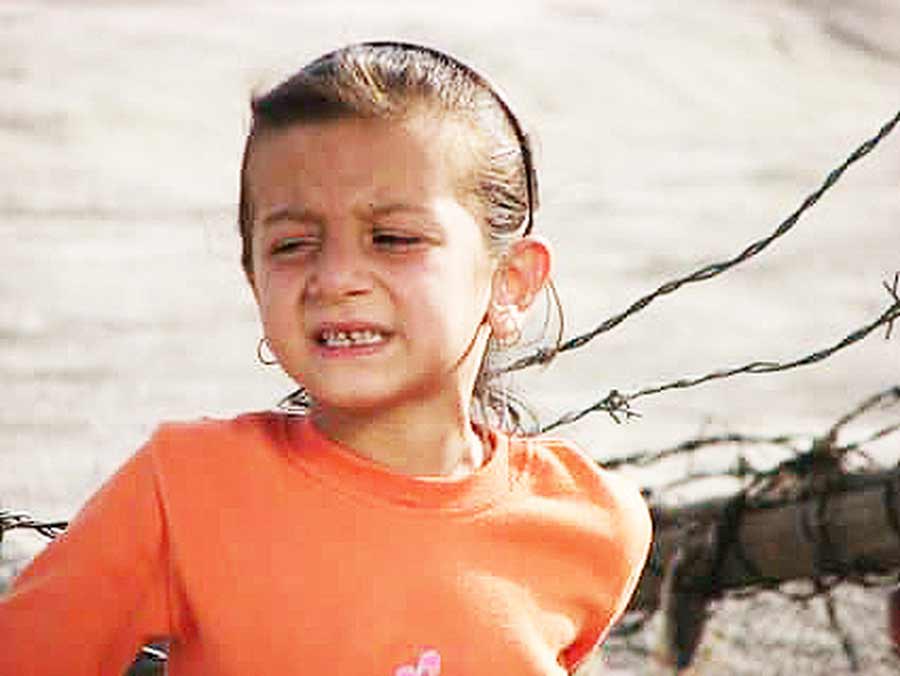
Football Field tells the story of several children who are constantly driven from one alley to another in search of a suitable place to play football. At the center of this search is a determined little girl named Negin, with a ponytail tied with a pink ribbon, who wants to play football alongside the boys, contrary to the conventions of the neighborhood. But she encounters the stubborn resistance of local boys Messi, Mohammad Ali, Saadi, and others and the impenetrable barrier of “You are a girl; you cannot play.” She is excluded from the game.
What begins as a simple desire quickly becomes a battleground for social forces: scarcity of space, collective rituals, patriarchy, honor, and gender boundaries.
As the narrative progresses, through naturalistic dialogue, documentary-like atmosphere, and the performances of the children, the film penetrates deeper layers of parental violence and cultural confinement. Fathers eventually take a coordinated and symbolic action: they tear apart the footballs and shave the boys’ heads as punishment for playing football or for “falling in love.”
Ultimately, Negin, with a football her father has brought her while on leave from prison, becomes a “source of power” and a “liberating subject.” She leads the boys into the enclosed, asphalt-covered courtyard of a closed school, where, in the absence of adult surveillance, they achieve a symbolic yet fragile victory. For the first time, the “ground” truly resembles a football field. It is an ending that promises freedom while implicitly reminding us that this freedom is an exception, not the rule.
I had watched this warm and intimate children’s film several times at different intervals. Finally, after coordinating with Mr. Nasiri, I watched it once more, enjoyed the experience, and completed my analysis.
1. Theme and Worldview: The Dream of Playing in the Alleys of Tradition
From the perspective of its worldview, Football Field moves along the boundary between social class focusing on the working class and marginalized communities and feminist critique.
The film correctly demonstrates how economic poverty in peripheral areas becomes intertwined with “cultural poverty” and structural violence. Negin, in this context, is not merely a playful child but a symbol of “change” and questioning. Through her fundamental question “What is the difference between a girl and a boy?” she challenges the patriarchal structure governing the neighborhood.
In terms of Judith Butler’s theory of gender performativity, identities are constructed through repeated actions. Here, football becomes a “gender-defining act” for Negin: an act through which she seeks to shift gender boundaries. Yet the male-dominated world of the film responds by invoking “honor” and “people’s curses.” The complete absence of mothers from the domestic sphere is one of the work’s most significant ideological implications. This omission makes the film’s educational environment appear one-sided, violent, and devoid of emotional moderation.
Had the director incorporated mothers, even at the margins of the frame, we might have witnessed an interaction or conflict between parental perspectives, adding greater dramatic depth to the work. In its present form, the film presents a “male-aggressive” image of the family, in which a woman must either be “Kafieh the Madwoman” outside the symbolic order or “rebellious Negin,” fighting against that order.
From a feminist perspective, the film effectively portrays “public space” as a male territory, where the entrance of a woman even a girl is rejected through the accusation of “bringing shame.” The response the boys give Negin “If we play with you, we will lose our honor and the other neighborhoods won’t play against us” accurately represents a worldview in which masculine identity is defined in opposition to female presence. Nevertheless, the film occasionally falters in articulating this worldview.
For example, Negin and Messi’s dialogue about heaven, hell, and the fear of God seems less like something emerging from the mental and linguistic world of a child and more like language imposed on the actors by the director. This “adult-like” quality of the dialogue partially diminishes the work’s naturalistic purity and pushes it toward the realm of “moral instruction.”
At its thematic core, the film reflects a realist worldview rooted in Iranian social cinema, where children are not merely symbols of innocence but also carriers of profound social criticism. It recalls Abbas Kiarostami’s approach in films such as Where Is the Friend’s Home? (1987), in which children question social structures through their simplicity.
By focusing on football as a symbol of freedom, competition, and public space, Nasiri demonstrates how childhood games reflect adult inequalities similar to what Victor Perkins describes in Children’s Cinema and Ideology (2005), where play is regarded as a field for reproducing gendered power.
Here, football becomes more than a simple activity; it turns into a metaphor for class and gender struggle. Marginalized children struggle in narrow, rocky alleys to gain access to “level ground,” a symbol of social justice that the local community has reserved for boys. Negin’s insistence on entering this space is, in effect, an ideological challenge to gender divisions.
The film’s worldview portrays marginalization not as a passive backdrop but as an active and dynamic element. The neighborhoods of Abbasabad and Farajeh with their dusty alleys, stepped houses, visible poverty, and delinquency create a realistic environment reminiscent of Italian Neorealism, particularly Vittorio De Sica’s Bicycle Thieves (1948), where the everyday lives of the underprivileged are portrayed without exaggeration.
Here, poverty is connected to a cycle of crime: Negin’s father is in prison, a subtle reference to the social causes of poverty on the urban margins. Yet Nasiri’s worldview is dual. On one hand, he locates hope in the children’s resistance: Negin gains power through her father’s football, and eventually the children play together, symbolizing solidarity across gender lines. On the other hand, he highlights the traditional violence of parents, as fathers punish their children by tearing their sports clothes, shaving their heads, and imprisoning them.
This theme carries an ideological implication: children’s uprising against the traditional system. It can be compared with the theory of “the child as an agent of social change” discussed in Shohini Chaudhuri’s article Children’s Cinema in the Middle East (2015), where Iranian children are often presented as symbols of resistance to tradition.
The film’s strength lies in showing that prohibition does not necessarily begin with physical violence; it begins with words and then progresses toward punishment: clothes are torn, shoes are cut with scissors, hair is shaved, and children are confined in enclosed spaces. The child’s body, in Foucauldian terms, becomes the site upon which power and discipline are imposed.
The film is also successful in connecting this educational violence to the “collective gaze” of the neighborhood. The passing curse “May whoever’s father be cursed…” even though it is not placed entirely precisely within the dramatic context, exposes the governing logic: ultimately, the blame returns to the father; honor is the primary form of capital; and football, because it is visible, threatens that capital. It is here that the film moves beyond a children’s story and approaches a critique of the social order.
Nevertheless, the film’s worldview is inconsistent and superficial in certain respects. The character of Kafieh, a middle-aged woman with mental difficulties who rocks empty cradles and symbolizes lost motherhood and psychological trauma on the margins, suddenly disappears without returning to the story or being developed even though the film itself begins with her image and voice.
This omission diminishes the thematic depth and makes the worldview feel superficial, as though the film retreats from fully exploring the psychological layers of marginalization. Had Kafieh been maintained as a persistent symbol, the film could have revealed deeper layers of social trauma, similar to Majid Majidi’s Children of Heaven (1997), which portrays marginalization with greater continuity and maintains its symbols throughout the narrative.
Furthermore, the film approaches excessive restrictions in impoverished neighborhoods from a class perspective. Mourning spaces and male conversations in teahouses demonstrate male solidarity while simultaneously legitimizing domestic violence. The teahouse scene, featuring a man drinking tea who is later revealed to be Messi’s father, symbolizes adults’ indifference toward the children’s world.
The film attempts to portray the life of the neighborhood without isolating the children from it, but its insufficient development of this objective creates weaknesses in the atmosphere, such as the artificial scene of fathers punishing their children simultaneously, which appears more planned than natural. This inconsistency distances the worldview from ideological depth, although the film’s courage in depicting the cycle of violence on the margins makes it a valuable work within Iranian children’s cinema.
A comparison with Amir Naderi’s The Runner (1984), which combines marginalization with a liberal vision of individual freedom, suggests that if Nasiri had connected the religious layers such as the children’s dialogues about God and heaven to the social critique more deeply, the film’s worldview could have moved beyond the symbolic toward a more profound analysis.
Nevertheless, the film’s worldview occasionally slips from observational realism into “statement-making,” particularly in the children’s theological dialogues about heaven, hell, and God’s relationship to girls playing football. The problem is not the subject itself, but the nature of its expression. When a child’s language suddenly begins to resemble that of an adult writer, the balance of the worldview is disrupted. Instead of discovering, the film begins to declare something that conflicts with the logic of drama, as Aristotle emphasizes the importance of “probability and necessity.”
2. Dramatic Structure and Credibility: A Narrative Train on Shaky Rails
The drama of Football Field is built around a simple structure that begins with the initial hook of Negin’s insistence on joining the football game and reaches its climax when her football alters the balance of power. This concentration on a central line is one of the strengths of the short-film format and is consistent with the recommendations of theorists such as Cooper and Dancyger regarding narrative economy in short films.
Rather than accumulating multiple subplots, a short film needs a central line to which everything else is connected. The inciting incident occurs when Negin stands beside the barbed wire and is confronted with a “no.”
The dramatic arc, drawing on Syd Field’s three-act model in Screenplay (1979), is clear but uneven. The first act hooks the audience by introducing Negin and the boys’ resistance, bringing the viewer into the world of the film by observing the game from the sidelines. The second act develops through challenges and punishments, with turning points such as Kafieh pouring water and the fathers tearing apart the footballs. The third act lands with Negin’s football and the final game at the school, which functions as a symbol of collective victory.
The key turning point is the arrival of Negin’s football, brought by her father from prison. This element challenges the credibility of the drama: why would a marginalized father, while on temporary leave from prison, bring a football for his little daughter?
Although this element functions as a symbol of hope, it weakens the dramatic logic because it seems inconsistent with the realities of poverty, imprisonment, and marginalized men. This recalls a criticism sometimes directed at Iranian children’s films, where symbolic elements occasionally sacrifice credibility, as discussed in Amir Ali Nabavian’s article Credibility in Iranian Realist Cinema (2013), which emphasizes that symbolic elements should correspond with social reality if the drama is to remain coherent.
The dramatic elements, particularly the dialogue, are numerous and make the film dialogue-driven. This can be a weakness in short cinema, where greater emphasis should generally be placed on the image and on conveying meaning visually rather than through dialogue. At times, even the dialogue itself feels artificial, resembling adult speech more than children’s language, thereby diminishing the credibility of the characters.
These dialogues may be understandable within the religious context of the community, but they nevertheless feel unnatural and imposed, as though the writer’s statements are being spoken through the children. This is precisely where the work shifts from simply showing to declaring, disrupting its realist balance. As Aristotle emphasizes in the Poetics, tragedy and drama more broadly is more effective when events and speech arise from the internal logic of “probability or necessity” within the characters and situations, rather than from an external desire to communicate a message.
Another turning point occurs when Saadi throws the football from Negin’s hands and it subsequently lands inside the school. The scene has the potential to generate suspense, but Negin and her friends’ artificial silence before the action diminishes its dramatic intensity and makes the director’s hand more visible. Overall, despite weaknesses in credibility, the film’s dramatic structure is solid enough to advance its central theme.
The story progresses primarily through movement within space: the location of the game continually changes from one alley to another. This movement is a visual translation of the idea of “searching for a field” and is among the film’s most intelligent decisions. At the same time, the fathers’ punishments increase the dramatic pressure and establish a “cost” for playing the game. However, the repetition of the boys’ opposition eventually pushes the drama toward stagnation.
Climax and Resolution
The main turning point is the arrival of Negin’s football, an object that becomes “power capital” and changes the balance of forces. Negin transforms from an excluded spectator into the leader of the group. The film reaches its climax when the children arrive at the school courtyard and the game begins. This climax is defined not by a verbal victory but by gaining access to space. Such a choice is consistent with the logic of visual storytelling and keeps the ending from becoming overly rhetorical.
From the perspective of David Bordwell and Kristin Thompson’s narratology, this type of climax depends less on “knowing” than on “seeing/experiencing”; narrative information is conveyed through changes in space and action.
Causal Gaps and Credibility
The credibility of the drama is one of the film’s principal weaknesses.
Tzvetan Todorov argues that a work’s internal verisimilitude derives from its adherence to the rules it establishes for itself. Football Field, which presents itself as a realist drama, departs from its own causal logic in several places:
The Arzu and her mother subplot: Although this storyline effectively conveys the pathological sensitivity surrounding gender issues and excessive concern with “honor,” its presentation suffers from serious problems of credibility and narrative connection.
The “Arzu’s mother” thread is dramatically compelling the order of honor, gaze, and shame but its entrances and exits are disconnected. At one point, the children flee after being warned, “Arzu’s mother is coming,” without the audience seeing either the threat or its reason. Then, suddenly, the threat appears in another shot.
If the film had included a brief establishing shot of Arzu’s mother approaching, or at least a clearly defined visual reaction, the children’s collective fear could have moved from something merely reported to something experienced by the audience. The children’s flight from “Arzu’s mother” without showing the source of the threat, Saadi’s return to the location, the scene in which he sees Arzu through the window, and the mother’s subsequent extreme reaction feel less like events emerging naturally from the characters’ reality and more like artificial, director-driven construction or an editing error designed to justify a series of punishments, including shaved heads and beatings.
The character of “Kafieh the Madwoman”: The film opens with close-ups of her hands, giving the character the potential to become a recurring motif or symbol. Yet she is suddenly removed from the narrative, and her organic connection to the ending is completely severed. This constitutes a weakness in the characterization.
Her presence at the beginning creates a dramatic expectation that is never fulfilled.
Had the film established her presence as a continuing part of the characters’ lived world, or brought her back at a key moment, this narrative thread could have moved beyond the decorative. She appears prominently in the visual opening credits, performs an important action threatening the children with water and asks a key question: “Has Negin’s father returned?” Yet the film never returns to her.
If “Kafieh” existed merely for atmosphere, her presence in later sequences even in the background could have strengthened the sense of a living world. And if she was intended as a symbol of “psychological trauma / poverty / empty motherhood,” her return at the climax could have expanded the film from a theme of gender into a broader theme of “the destruction of the family and neighborhood,” without becoming didactic.
The off-screen curse about raising children: The voice heard outside the frame saying, “May the father of whoever doesn’t raise his child properly be cursed,” during the mourning ceremony, when the children’s ball with a black mourning banner hits the door and tears it, is not connected to a specific action occurring at that moment. Because we do not see the speaker, it feels more like an external “seam in the message” than a part of the action’s fabric.
If the line had been spoken by Messi’s father or one of the mourners, and had generated a reaction, both credibility and the theme of “honor/fatherhood” would have been strengthened. The theme would have been established through action rather than declaration. As it stands, the line almost seems to have been inserted after the editing process.
Temporal discontinuity: The film struggles to communicate the passage of time. While the lighting, visual atmosphere, and flow of the story suggest the continuity of a single day, dialogue such as “He beat me yesterday” indicates that several days have passed. This contradiction between “calendar time” and “dramatic time” disrupts the viewer’s sensory continuity.
The ambiguity surrounding the passage of time damages credibility. There is no clear transition from daylight to sunset, night, or morning. This temporal ambiguity can confuse the viewer about the continuity of events. Did the entire story happen in a single day? The sudden changes in the circumstances of some children being imprisoned or subjected to collective punishment without sufficient visual indications create a sense of uncontrolled compression.
A short film can eliminate time, but such omission must be marked by recognizable signs; otherwise, the chain of cause and effect suffers. When we learn that a day has passed through only a single line of dialogue “yesterday” and have no complementary visual code, it becomes difficult to understand the continuity of pressure and punishment, such as Muhammad Ali’s confinement. A short film can also compress time, but compression is not the same thing as uncontrolled ambiguity.
Had the film used simple indicators such as changes in lighting, changes of clothing, or even a brief audiovisual transition, it could have preserved narrative economy while making the chain of cause and effect more credible. Even Negin’s clothes never change.
Staged coincidences: The simultaneous shaving of all the boys’ heads and the fathers’ tearing apart their footballs, shoes, and shirts is symbolically powerful, but within a realist narrative it appears excessively artificial and deliberately orchestrated.
This exaggerated symmetry pushes the film away from social realism toward a form of overstated symbolism and symbolic political statement, making its credibility difficult for a demanding viewer to accept and rendering it somewhat implausible within the social context of such a neighborhood.
As Aristotle states in the Poetics, “the probable impossible is preferable to the improbable possible.” Here, however, the simultaneous occurrence of these events moves beyond the realm of probability and increases the impression of an externally imposed design.
If the film had shown how this wave of punishment spread through the neighborhood for example, through a brief conversation among the fathers the simultaneity could have shifted from “artifice” to the social logic of rumor and honor.
Logical gaps: Imprisoning a child in a bathroom for twenty-four hours, or having a father who has just come out of prison bring home a football, are paradoxes that lack adequate narrative preparation.
Had these events been accompanied by greater narrative subtlety for instance, by gradually showing the violence or establishing the father’s motivation for buying the football the dramatic rhythm could have become more compelling. Alternatively, brief flashbacks explaining the football as a gift could have made the drama more coherent and allowed Negin’s character arc, from a passive marginalized child to an active leader, to develop more naturally.
3. Form and Aesthetics: Frames of Dead Ends and Incongruous Music
From the perspective of form and genre, Football Field is a realist child-centered social drama with documentary-like tendencies, traces of neighborhood black humor, and a hopeful ending. It is close to the tradition of films produced by the Institute for the Intellectual Development of Children and Young Adults in the 1970s, as well as to some child-centered works of later decades, where the focus is on real life without exaggeration.
The use of the Kurdish language, real locations, and non-professional actors contributes to the authenticity of this approach. In terms of atmosphere, rather than creating an isolated children’s world, the film places the children within the actual structures of the neighborhood mourning ceremonies, teahouses, domestic work, and adult supervision. This choice strengthens realism and reduces the risk of “childhood nostalgia.”
The film’s visual aesthetic is centered on tight, enclosed frames, reflecting the limited space and restricted living conditions of the marginalized neighborhood. It creates a sense of confinement while also establishing intimacy with the children’s world. This is one of the film’s visual strengths and effectively conveys a feeling of suffocation and environmental restriction. The stepped, rocky landscape of Sanandaj functions almost as an active character in the film.
The children are constantly pressed against walls and slopes; there is little space for play and little affection. The opening credits’ transition from darkness to light symbolizes hope emerging from darkness, while the limited number of wide shots such as the school courtyard keeps the focus on the details of childhood and emphasizes the final sense of liberation.
The use of patches of color within the film’s predominantly earthy and deprived palette the red shirt worn by Kafieh, Negin’s orange clothing, and the white and red cradles is also a visual strength. These colors both emphasize the characters and create a poetic quality.
However, in some shots particularly poorly composed cuts of heads or bodies such as the scene in which Negin sits on the stairs while the boys’ bodies and parts of their heads are cut off by the frame, or the shot involving the Mamosta, whose head is cut off when he encounters the children the result is visually awkward. This framing drains the spatial restriction of meaning, causing the shots to fall from “confinement” into “incomplete framing.” The viewer is removed from the physical experience of the scene, and what might have carried symbolic meaning becomes an executional error.
If these visual amputations and cuts had been established consistently throughout the film as a conscious stylistic device, they might have acquired a symbolic reading for example, the elimination of individual identity under collective pressure. But their scattered and seemingly accidental nature turns them into a technical lapse.
The film’s decision to use very little music is consistent with its realism. The ambient sounds of the alleys, shouting, and brief silences contribute to the documentary-like quality. However, the Western jazz music used during the sequence and closing credits does not fit the atmosphere of Kurdistan. It breaks away from the film’s aesthetic and feels conspicuously heavy-handed and deeply inconsistent with the cultural environment of Kurdistan and the impoverished atmosphere of the film.
It seems as though the film has neglected cultural harmony a criticism similar to the one raised in Houshang Golmakani’s Music in Iranian Cinema (2001) regarding comparable films, where he emphasizes that music should correspond with cultural context in order to strengthen form.
This choice not only fails to deepen the sense of liberation, but instead functions as an imposed and incongruous element, separating the viewer from the inner world of the work.
As Robert Bresson suggests, music in cinema should emerge organically from the world of the film rather than being imposed upon it; music should not function as an emotional “shock absorber.” Had the film ended with the continuation of the same ambient sounds, or even with a heavy silence, the symbolic impact of taking possession of the field would have been far deeper.
Here, the jazz music does not help Negin’s liberation; instead, it disconnects the viewer from the tangible reality of the work. Had the director chosen ambient sounds or even joyful Kurdish music instead of this foreign element, the ending would have remained more memorable. This incongruity is one of the film’s most obvious formal weaknesses, affecting the dramatic climax and reducing its tension.
The film also suffers from repetition in its use of visual techniques. The repeated use of the “tilt” the vertical movement of the camera from torn slippers toward the shaved heads of the children eventually loses its dramatic effect and becomes a technical cliché. After several repetitions, these shots begin to feel artificial and reduce visual variety.
If the form had been enriched with greater variation, such as wider shots of the neighborhood showing the broader scale of marginalization, the aesthetic dimension could have become deeper.
Overall, it must be said that with better cinematography, the film would have presented itself far more successfully.
A comparison with Majidi’s The Color of Paradise (1999), which combines naturalistic aesthetics with a similar genre, demonstrates this lost potential. The vivid colors such as Negin’s orange shirt could have functioned as symbols of hope, but they remain confined within tight frames.
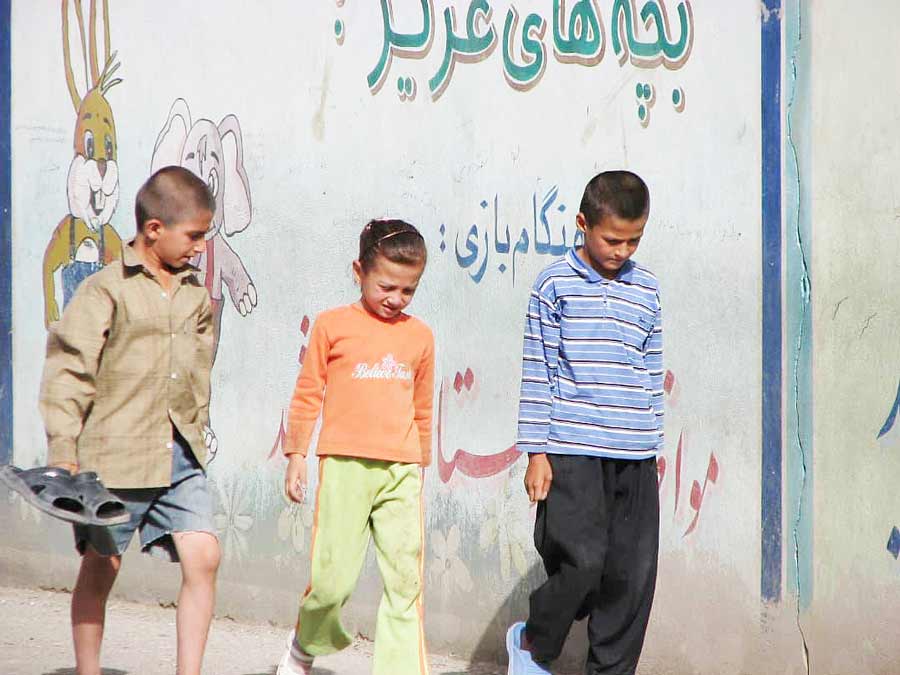
The editing, with its rapid cuts between scenes of play and punishment, creates a turbulent rhythm that corresponds with the life of the marginalized neighborhood. The cinematography, focused on close-ups, creates an intimate atmosphere, but the monotonous earthy color grading occasionally becomes repetitive. Had the symbolic colors such as Kafieh’s red clothing been connected more deeply to the film’s themes, the form could have moved from straightforward realism toward a more subtle poetic quality.
The film is “talkative,” and dialogue carries a considerable burden of meaning. In some sections, this abundance of dialogue contributes to the energy and liveliness of childhood the teasing, arguments, and banter. Yet the short film, as Cooper and Dancyger suggest, requires “discipline”: every line should either create action or sharpen it.
In this film, some of the moralistic conversations could have been tied to action for example, through an adult’s reaction or through a concrete choice made by Negin. In that case, instead of becoming a speech, they could have become drama.
The shot of the shop containing torn footballs is a strong visual idea: an “execution of footballs” functioning as an archive of repression. But when some of the balls appear excessively new, the metaphor seems deliberately arranged rather than naturally embedded. Realism is often most vulnerable in its smallest details.
The “football,” as a symbolic object, is the axis of conflict and solidarity. The fathers’ tearing apart of the boys’ footballs symbolizes the violent repression of desire and the severing of their connection with childhood joy. By contrast, Negin’s new football represents a fragile and paradoxical hope emerging from the very structures that are dysfunctional the prison and the father’s absence.
4. Characterization and Performance: Naturalistic Children, Stereotypical Adults
The film’s undeniable strength lies in its direction of the child actors, particularly the outstanding performance of Negin Sharifi. Through her penetrating looks and meaningful silences, she effectively conveys both desperation and power. The boys Messi, Mohammad Ali, and the others also possess a kind of “Kiarostamian simplicity” that lends authenticity to the work.
By contrast, the adult characters the fathers and the shopkeeper approach the repetitive “types” of Iranian social cinema: the authoritarian and irrational man.
Negin, as the central character, is one of the film’s strengths. She is active, persistent, and willing to negotiate. She is not merely a victim but an active force driving the drama and constitutes the film’s central pillar. She becomes a symbol of female resistance, expressing her childish mischief through her insistence on playing football.
Yet although the actress playing Negin remains at the center of attention, the character lacks deeper psychological development. We do not see motivations beyond her “love of football.” Negin’s empowerment through the football gives her a strong character arc, but the absence of deeper emotional reactions limits it. At these moments, if the film had given Negin’s body her exhaustion, wounded pride, jealousy, and fear more room instead of relying on declarative statements, the character could have gained greater depth.
The boys kind-hearted Messi, rebellious Mohammad Ali, and adventurous Saadi appear authentic through their everyday dialogue. Their performances are a strength because the children act without exaggeration. They are not one-dimensional villains; they are themselves victims of their fathers’ disciplinary system.
The shaving of their hair and tearing of their clothes functions both as punishment and as the production of uniformity: the bodies become identical so that their desires can become identical as well.
Adults: The Absence of Mothers and the One-Sided World
The problem, however, lies in the characterization of the adults, who are almost entirely reduced to one-dimensional stereotypes. The parents, particularly the fathers, are primarily portrayed as strict and authoritarian. While this one-dimensionality may serve the film’s critical position, it diminishes the dramatic complexity and realist richness of the work.
The adult performances occasionally become artificial. The teahouse scene, with the men speaking explicitly and bluntly about “a dead man being cursed because of his child’s poor upbringing,” resembles an ideological statement more than an actual conversation taking place in a teahouse.
Had the characters been developed with additional layers, the performances would have become richer. This gap between the children’s performance style and that of the adults could itself be interpreted as a symbol of the generation gap.
The film deliberately constructs the adult world as “male”: mourning ceremonies, teahouses, fathers. This choice is logical within a critique of patriarchy. Yet the absence of mothers deprives the film’s world of a diversity of perspectives.
This makes the critique of patriarchy simpler but less profound. Without mothers whose presence could disrupt the gender balance, introduce differences of opinion within families, and diversify the educational environment the world becomes overwhelmingly male. It becomes a feminist critique suggesting that mothers themselves are absent from the marginalized environment.
The presence of mothers could have softened the educational environment and provided a counterbalance to the fathers’ one-sided violence. Their absence means that the film presents only one perspective on domestic life and raises the question: In this world, is there no peaceful female voice at all?
Even a single mother, not as a savior but simply as a second voice, a different voice, or a representation of inner conflict, could have made the film’s social realism more convincing and its conflicts more multilayered.
Both Kafieh and Arzu’s mother function more as instruments for creating tension than as fully developed characters. Had the director, rather than continually emphasizing paternal violence, revealed the hidden emotional layers within the homes, the drama would have possessed greater richness.
5. Conclusion: Final Assessment Victory in the Absence of Observers
Jalal Nasiri’s Football Field is a film about how a simple desire playing a game in a poor neighborhood becomes a complex struggle over gender, honor, and power; and how a young girl, by possessing the “football,” can temporarily reverse the hierarchy for a few minutes.
The film is a document of the efforts of short cinema to represent neglected sections of society.
The film’s strengths lie in its subject matter, precise sense of place, and symbolic ending. The children take refuge in the school courtyard a symbol of awareness and education where, in the absence of repressive traditions, they reclaim their share of life. The film succeeds in depicting the “children’s uprising against the traditional parental system.”
If the film had exercised greater precision in temporal and visual editing, avoided the incongruous jazz music, remained faithful to gradual realism instead of relying on exaggerated symmetrical punishments, and benefited from stronger cinematography, we might today have been able to call it a neorealist masterpiece.
Nevertheless, Football Field remains a respectable and courageous work for its ability to become a “voice of the margins.”
The film reminds us that football in this geography is not merely a game; it is a struggle to “be seen” and to prove the truth that the playing field belongs to anyone who has the courage to run, regardless of gender or class.
Among its tight frames and dusty, sloping alleys, the film ultimately opens a window toward “underground hope.” Despite weaknesses in credibility, formal inconsistency, and superficial characterization, it offers a hopeful message.
Weak management of narrative time, certain artificial plot points such as the Arzu episode the unnecessary inclusion of the Mamosta sequence and the questions surrounding him, despite the fact that we know nothing about his character, the stereotypical nature of the adult characters, the unexplained elimination of symbolic characters, and particularly the inappropriate choice of the closing music all diminish the work’s coherence and its deeper impact.
The film oscillates between “observational realism” and “imposed symbolism.”
These weaknesses indicate that although the filmmaker possesses a sharp eye for selecting subjects and situations, he has not been equally successful in transforming those observations into the compressed, coherent, and credible dramatic structure required by the short-film form.
The film feels more like an extended documentary-style piece with dramatic components than a tightly structured and polished narrative short film.
Compared with works such as Bahram Beyzai’s Bashu, the Little Stranger, which places a child in confrontation with culture and achieves greater psychological depth, or Kiarostami’s successful short film’s, which combine economy with natural texture, Football Field lacks the same degree of subtlety in execution and formal discipline.
Nevertheless, the final image of the children playing in the school courtyard like the temporary opening of a locked public space is such a clear and powerful thematic idea that it remains in the memory.
The film clearly demonstrates that in such a geography, justice is not a universal right but a temporary and fragile privilege that must be reclaimed each time through effort and sacrifice.
Ultimately, although Football Field does not achieve technical perfection, its sincerity of vision and its documentation of a portion of social reality make it a respectable and thought-provoking work within Iran’s documentary-oriented and social cinema.
Its awards at the Fajr Film Festival and international festivals in 2009 demonstrate its success. Yet had elements such as the music, the passage of time, and the presence of mothers been more cohesively integrated, the film could have reached a higher level.
Ultimately, the film reminds us that children’s cinema can serve as a mirror for social issues, although it requires greater attention to credibility if it is to leave a more lasting impact.