
Jalil Rasouli’s “Bismillah” Exhibition Opens at Aseman Cultural Complex.
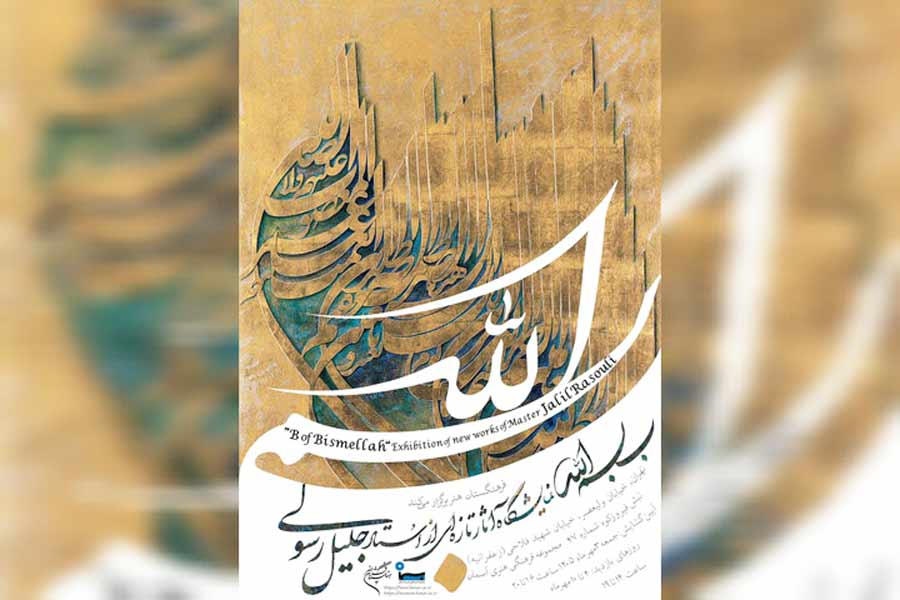
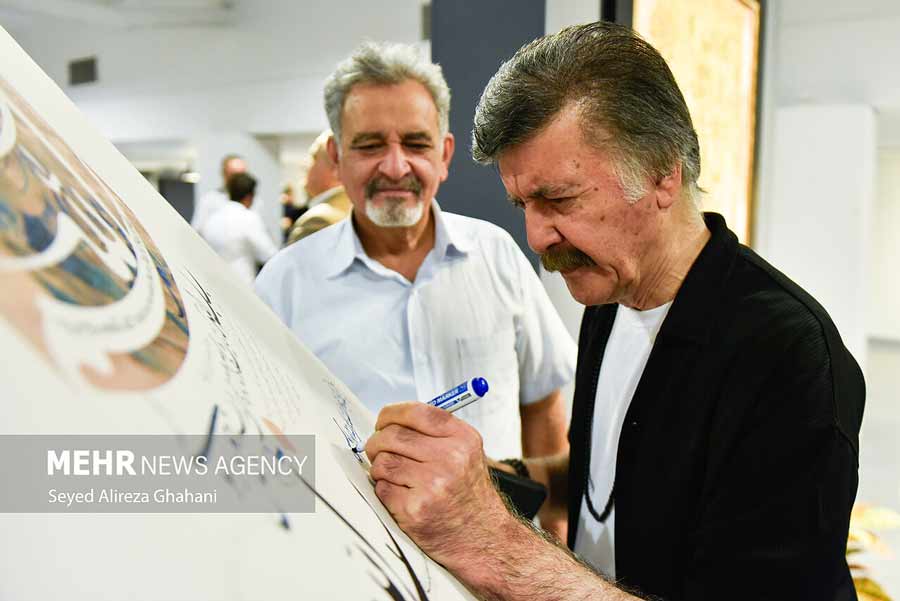
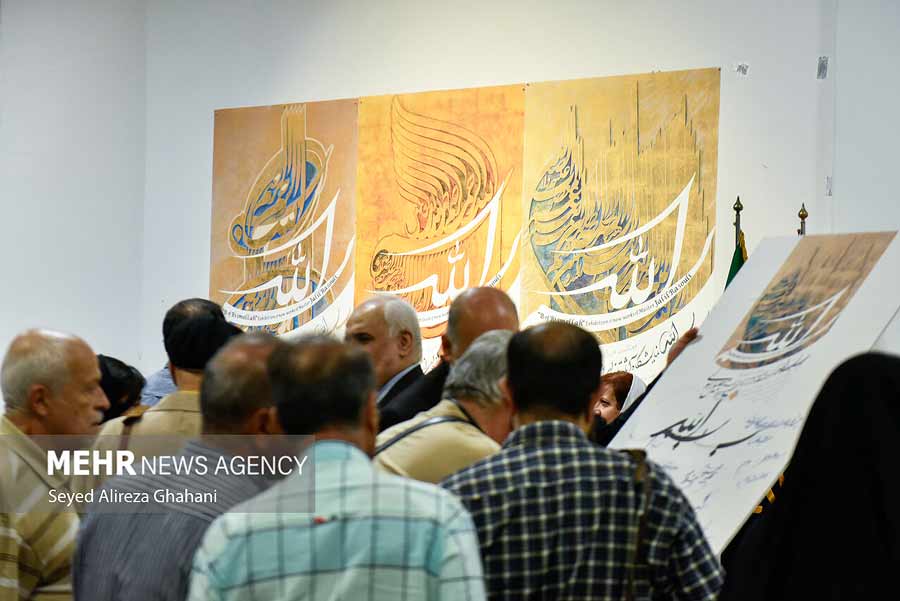
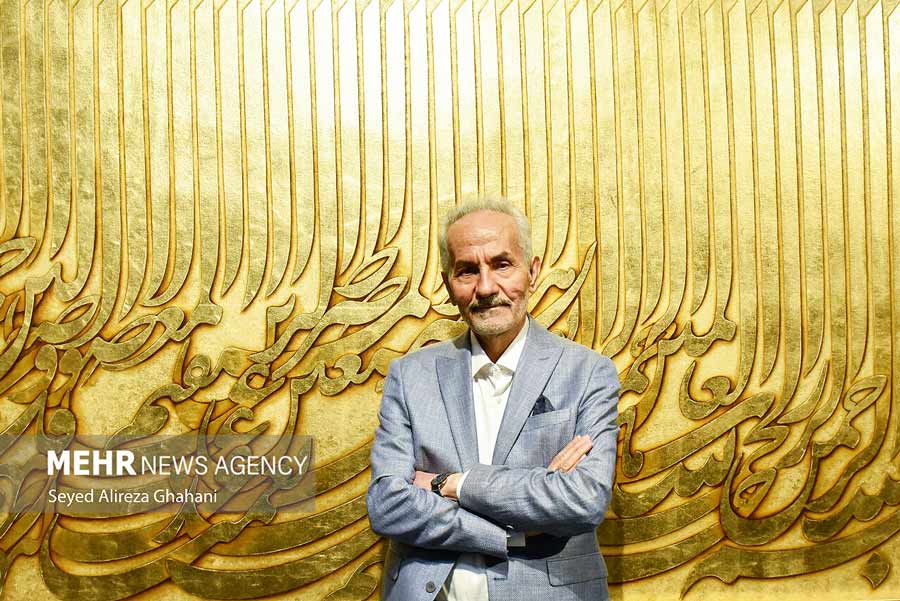
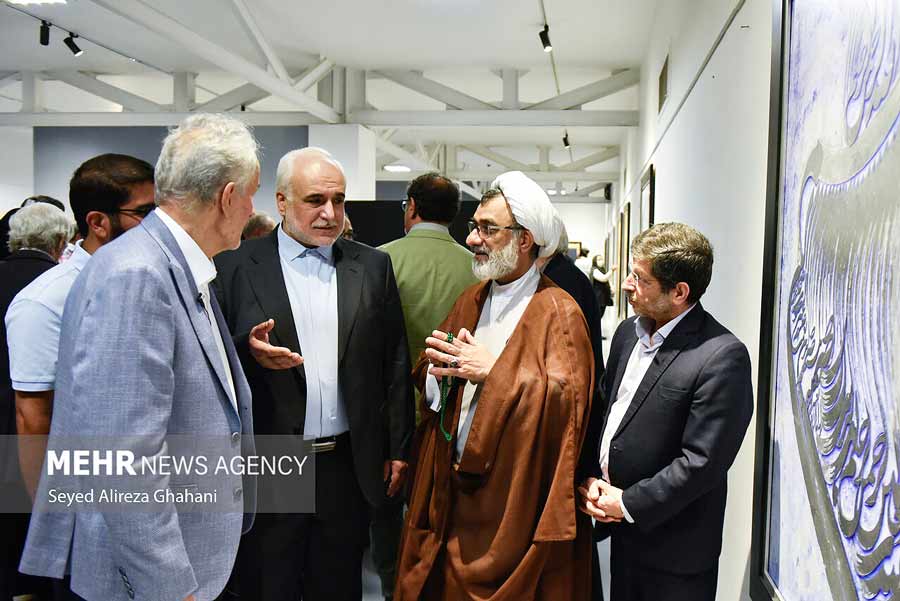
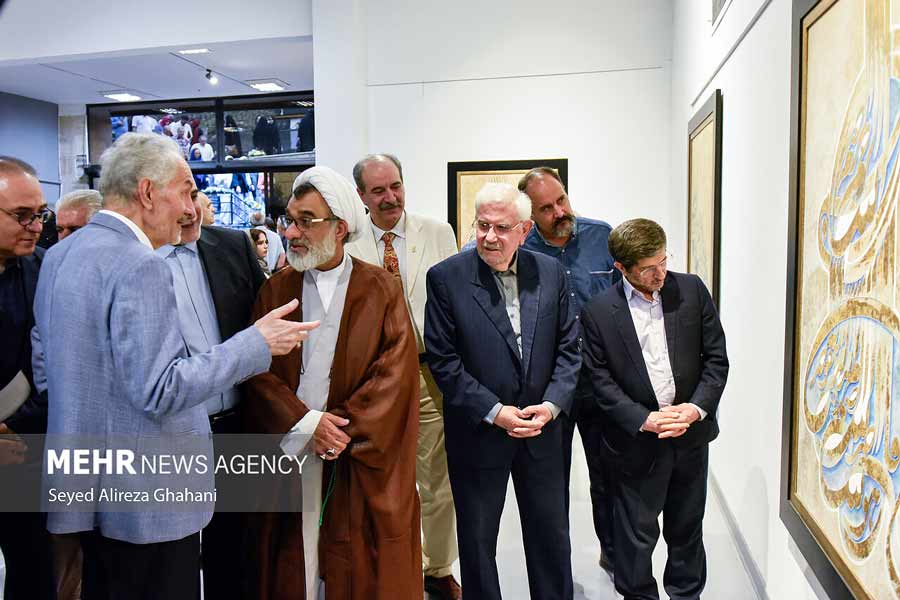
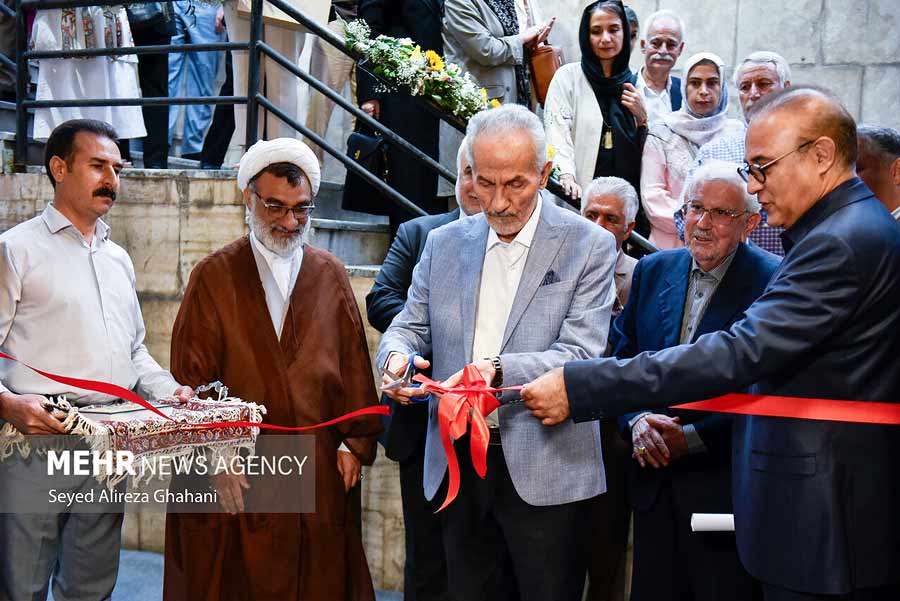
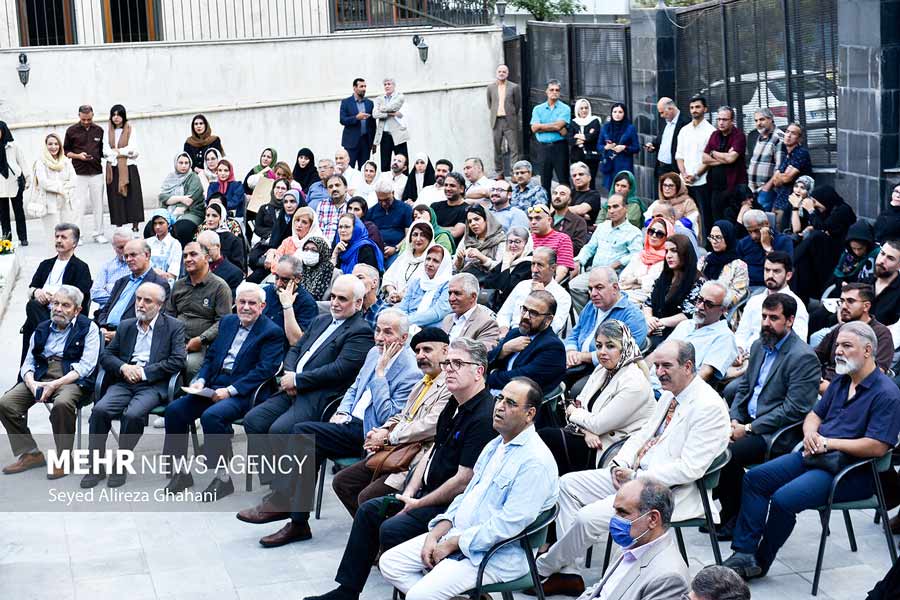
According to Artmag.ir, an exhibition titled “Bismillah”, featuring previously unseen works by Jalil Rasouli and exploring the relationship between calligraphy and the truth of the divine word, opened on Friday evening, 25 September 2026, at the Aseman Complex of Iranian Academy of Arts.
The exhibition is being held during the first week of October 2026 at the Aseman Cultural and Artistic Complex of Iranian Academy of Arts.
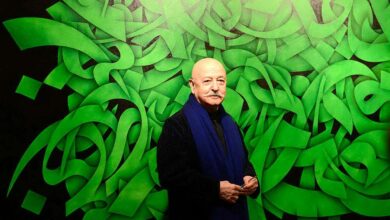
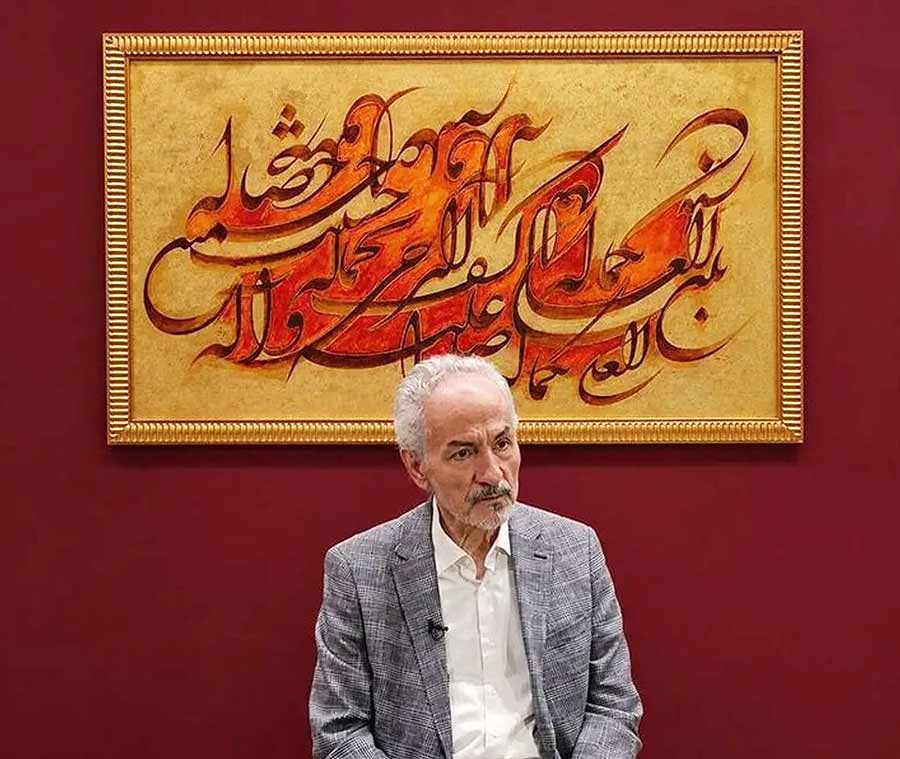
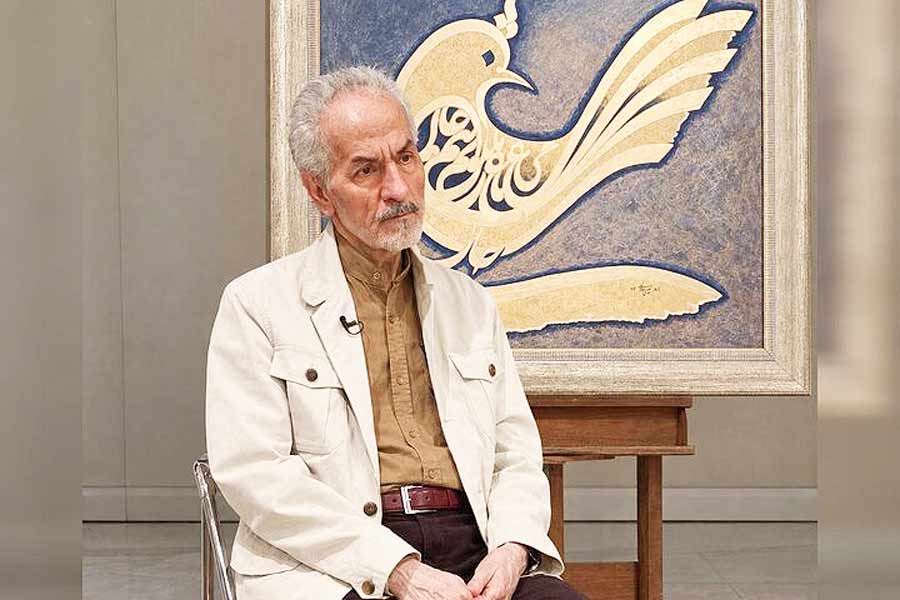
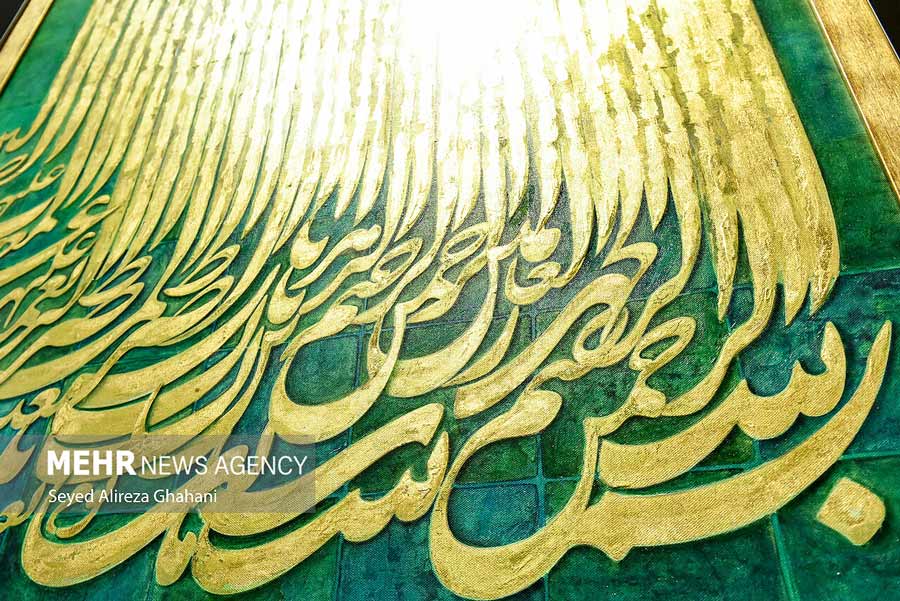
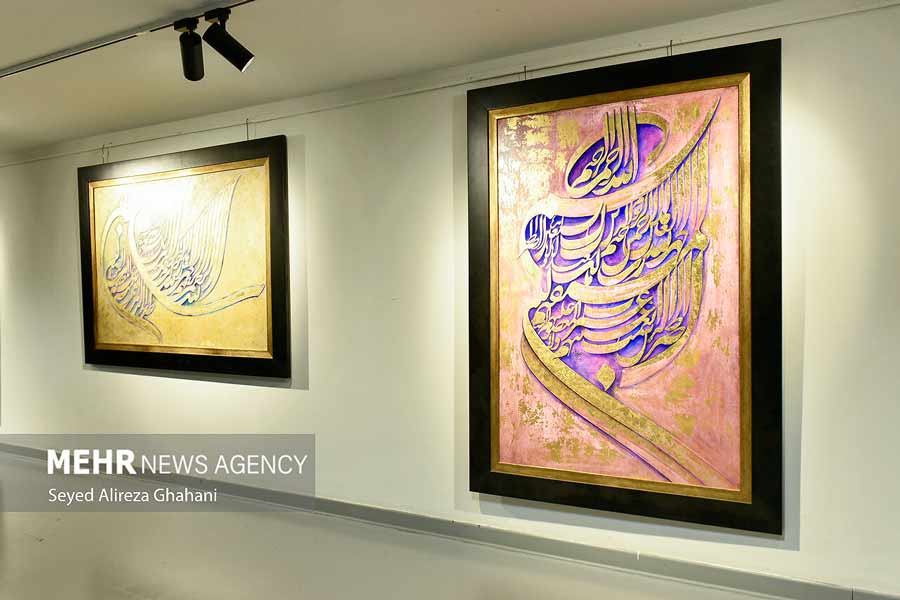
In this collection, Rasouli has combined the Qur’anic chapters Al-Fatiha and Al-Ikhlas with line, colour and form. Continuing his exploration of calligraphy and calligram, he has also experimented with a new approach to Shekasteh script an approach that, in his words, keeps the script broken while creating a new way of moving through it.
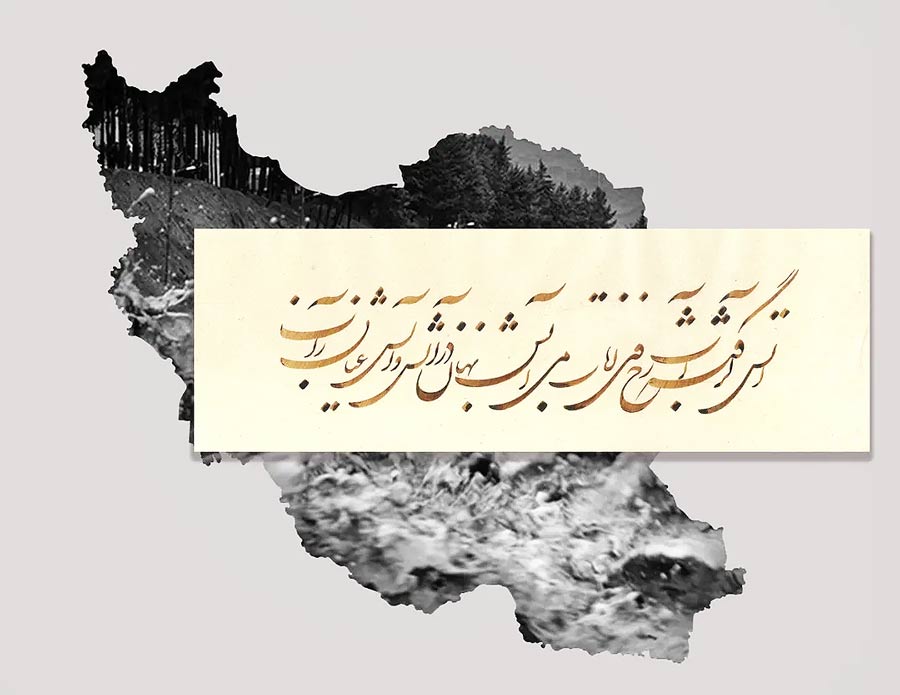


Born in 1947 in Hamadan, Rasouli is an associate member of Iranian Academy of Arts and a recipient of the First Degree Medal of Art from Iran’s Ministry of Culture and Islamic Guidance.
Rasouli has been active in calligraphy and calligram for more than six decades and has participated in numerous national and international exhibitions and events.
From the History of Calligraphy to the “Secrets of the Dot” in Jalil Rasouli’s Unseen Works
At the opening ceremony, Masoud Naseri, the exhibition’s artistic secretary, discussed the artistic dimensions and philosophy behind the cultural initiative. Referring to the process through which the exhibition was developed, he said the proposal for organising the exhibition was put forward by the Office of the President of Iranian Academy of Arts. Following several meetings attended by the Academy’s Research Department, Master Rasouli eventually agreed to make a collection of his previously unseen works available for the event. Initial discussions took place in December, and the exhibition was originally scheduled for May, during the spring season. However, due to the circumstances prevailing in the country, it was decided that the opening would coincide with the artist’s birthday celebrations in October.
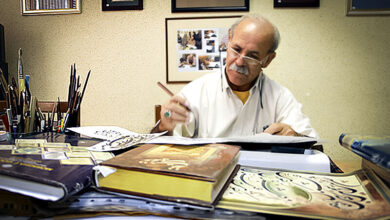
Naseri described spending time with Rasouli as akin to taking courses in the history of calligraphy, saying that during their meetings, it was as though the history of the art from the Safavid period, Mir Emad and Mirza Gholam-Reza Esfahani’s era through the Amir-Khani brothers and contemporary masters was being revisited.
Master Rasouli, who has been among the five leading figures in the Iranian calligram movement since 1971, has established a distinctive position in visual art and classical calligraphy through 65 years of continuous activity.
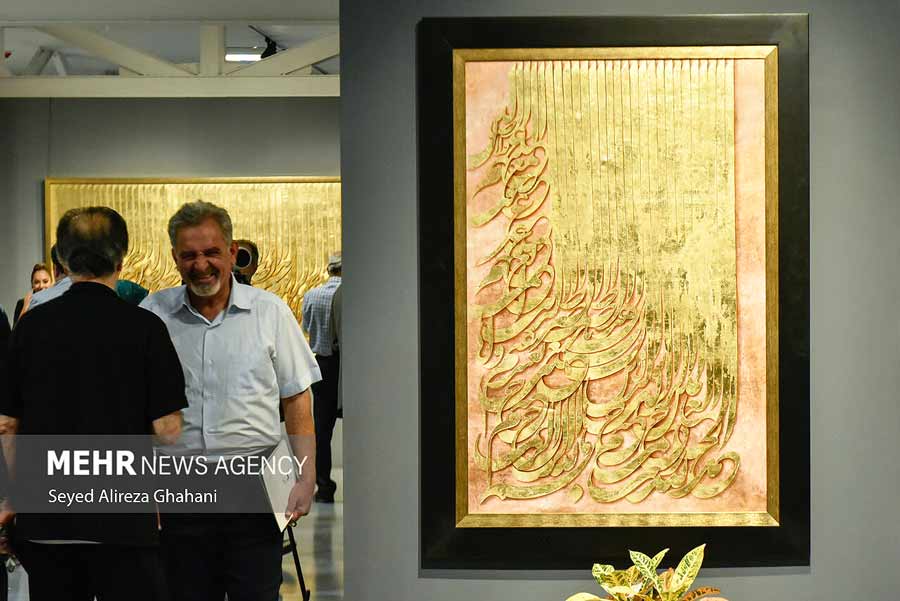
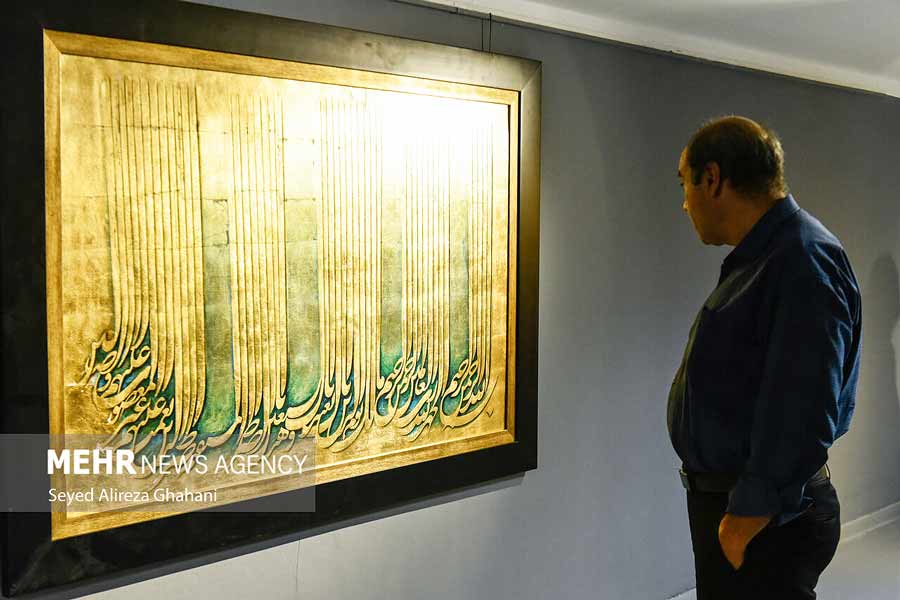
The exhibition features 23 large-scale works, 16 of which are devoted to Al-Fatiha and seven to Al-Ikhlas. In these paintings, elongated alifs and broken lines stand alongside one another with their tall forms and pleasing rhythms, creating a connection between form and meaning like the thread of a prayer bead.
At the end of his remarks, Naseri referred to the mystical dimensions of the works, saying that every dot in these paintings emerges from mystical interpretations of the Holy Qur’an the same perspective that sees the entire Qur’an summarised in Al-Fatiha and Al-Fatiha in Bismillah.
This perspective, rooted in the views of great mystics such as Mir Sayyid Ali Hamadani in his book “Asrar-e Noqteh” (“The Secrets of the Dot”), has been artistically manifested in Master Rasouli’s works.
Shah-Hosseini: Jalil Rasouli Is a Pillar of Authentic Contemporary Iranian-Islamic Art
Majid Shah-Hosseini, President of Iranian Academy of Arts, then took the floor. Referring to the limited time available and the audience’s eagerness to hear from the artist himself, he read a personal note recalling a meeting 51 years ago.
In the note, he recalled his first encounter with Rasouli’s works, saying: “I remember that 51 years ago, while studying, I went with the late Gholamreza Tanhā, a skilled calligrapher, to the second exhibition of Jalil Rasouli’s works at Seyhoun Gallery to study art. That delightful autumn morning, wandering among the master’s calligrams that captivated the heart and breathed life into the soul, was a sweet journey a garden of verses and lines that, after half a century, is still engraved in my memory.”
The President of the Academy of Arts went on to describe some of the memorable works displayed at that exhibition, saying: “At that meeting, we saw Master Jalil Rasouli as a tall, reserved and smiling young man standing on the staircase between the two floors of Seyhoun Gallery and welcoming visitors a meeting that feels as though it happened only yesterday.”
Rajabi: Jalil Rasouli’s Works Transcend Time and Are Rooted in Truth
Mohammad-Ali Rajabi, painter, artist and researcher, was then invited to speak at the ceremony, offering a perspective rooted in wisdom and scholarship on the dialogue between two kindred spirits in the sacred realm of art. Emphasising that a work of art comes to life through “interpretation”, Rajabi said: “An artist never directly interprets his own work, because room for interpretation must remain open to the audience. Calligraphy is the art closest to the truth of the word, and as Rumi beautifully explained, line cannot be separated from meaning. Beautiful calligraphy is that which reveals the truth more clearly.”
Referring to the concept of “practice” in traditional arts, he said: “In the realm of wisdom, the artist uses colour to discover the truths of beauty. When the word moves from the realm of meaning into outward form, it must maintain a relationship with truth. This is why, in spiritual practice, the artist must first embark on a journey of discovering truth, reaching a stage at which, in the language of the sages, his calligraphy becomes captivating.”
The Academy of Arts’ full member described Jalil Rasouli as an artist who has spent more than 50 years writing and enduring hardship solely out of a love for discovering truth. He added: “Authentic works are those that move according to the logic of meaning. The artist first transforms himself into the form of that meaning, and whatever then flows from this vessel becomes his work of art. As great artists have said, a work comes from elsewhere; the artist merely turns his attention to that realm and reveals what has been shown to him.”
He referred to the enduring place of such works in history, saying: “Whatever becomes connected to truth endures, because truth is eternal and timeless. Mr Rasouli’s works belong both to their own time and to ancient roots; for this reason, they will also guide and influence future generations.”
Rajabi concluded: “At a time when a distance has emerged between us and truth, seeing such works, born from the soul of a gifted artist connected to truth, is extremely necessary.”
Jalil Rasouli: I Devoted 65 Years of My Life to an Art That Serves God’s Will
At the end of the ceremony, Jalil Rasouli expressed his happiness at the presence of prominent figures from the world of art and began his remarks by saying: “The truth is that I did not intend to speak about the details of the works, because some of the untold stories were presented in the documentary that was screened. I am here only to express my gratitude to those dear ones who contributed to organising this exhibition.”
He said: “First and foremost, I thank the God of art and the Creator of artists for granting me the gift of calligraphy a gift through which I have been able, to the best of my ability, to portray a divine culture. Throughout these 65 years of professional activity, I have always tried to devote what God has given me to His own path.”
Emphasising his spiritual commitment to creating art, the calligrapher said: “I have tried throughout these years never to create a work that does not accord with God’s will. Even on many occasions when I received various commissions from clients, my priority has always been to preserve the dignity of this spiritual art and its connection with truth.”
Rasouli said: “This exhibition, organised with an emphasis on the relationship between calligraphy and the truth of the divine word, is not, from the perspective of critics, merely a display of form and beauty. Rather, in keeping with our authentic tradition, it can be regarded as a verse reflecting divine light within the realm of visual art.”
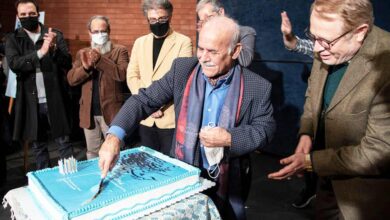
On the sidelines of the opening ceremony of Jalil Rasouli’s exhibition, a surprise birthday celebration was held for the artist.
In response to a question about how an artist today can preserve the authenticity of calligraphy while also exploring new paths, Rasouli said: “For me, calligraphy has always had many possibilities. In calligram, line is placed alongside colour and form, creating other possibilities; however, the essence of the line remains important to me, and new experiments also emerge from this path. An artist must receive training and work, while at the same time having the opportunity to experiment and discover new paths.”